Technical Post-Sales Leader Competencies Developer Tooling AI

Technical post-sales leadership used to be a fairly predictable discipline. You hired people who could read a stack trace, run a demo without breaking a sweat, and translate a customer’s business problem into an implementation plan. That formula still matters. But it’s no longer sufficient.
AI has moved into the developer toolchain itself , into IDEs, CI pipelines, support workflows, and the onboarding paths customers follow after they sign a contract. That shift is changing what “technical” means for post-sales leaders, and it’s changing which competencies actually predict success on a team. This guide breaks down what technical post-sales leader competencies look like in a world where developer tooling AI is no longer optional infrastructure , it’s the baseline.
This isn’t a hype piece about AI replacing solutions engineers. It’s a practical look at how the role is being reshaped, which skills are becoming table stakes, which are becoming differentiators, and how leaders can build teams that hold up under that pressure.
What Is a Technical Post-Sales Leader?
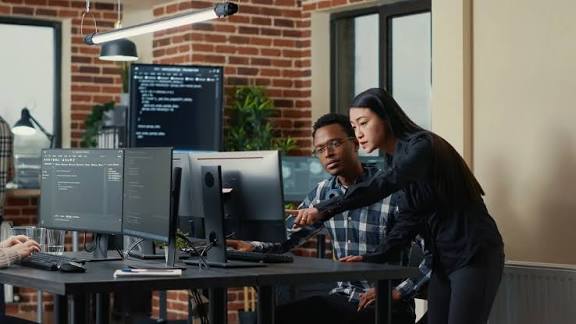
A technical post-sales leader manages the people and processes responsible for a customer’s experience after a deal closes. That typically covers solutions engineering, technical account management, customer success engineering, and implementation teams. The title varies by company , VP of Customer Engineering, Head of Solutions Architecture, Director of Technical Success , but the mandate is consistent: make sure customers actually get value from a technical product, not just access to it.
This role sits at an unusual intersection. It requires enough engineering depth to be credible with a customer’s developers, enough business fluency to defend renewal and expansion revenue, and enough people leadership to keep a technical team motivated through the unglamorous parts of the job , debugging someone else’s integration at 11 p.m. before a go-live.
What’s changed recently is the toolchain these leaders and their teams now operate inside. Developer tooling AI , code assistants, AI-powered debugging aids, automated documentation generators, intelligent ticket triage , has moved from novelty to default expectation. A technical post-sales leader who doesn’t understand how that tooling works, and how customers are using it, is working with an incomplete picture of their own environment.
Why Technical Post-Sales Leadership Matters in Modern SaaS
Post-sales has quietly become one of the highest-leverage functions in enterprise SaaS. Net revenue retention, not new logo growth, is what most public SaaS companies get measured on by investors, and net revenue retention lives almost entirely downstream of the sale , in onboarding, adoption, and renewal conversations.
A technical post-sales leader shapes all three. Their team decides how fast a customer reaches first value, how cleanly a product integrates with a customer’s existing stack, and how confidently a customer’s engineering team can self-serve once the vendor’s team steps back. When that function runs well, expansion revenue follows. When it runs poorly, churn shows up in a board deck a few quarters later with no obvious single cause , just a slow accumulation of frustrated developers.
AI developer tooling raises the stakes further. Customers increasingly expect the products they buy to include AI-assisted setup, AI-assisted troubleshooting, and AI-assisted code generation for integrations. A post-sales team that can’t speak fluently about how those capabilities work , and where their limits are , loses credibility fast with technically sophisticated buyers.
Quick Summary: Technical post-sales leadership drives retention and expansion by owning the customer’s path to value. As AI becomes embedded in developer tooling, the leaders who succeed are the ones who treat AI fluency as a core competency, not a side interest.
Core Competencies Every Technical Post-Sales Leader Competencies Developer Tooling AI Need

Before diving into AI-specific skills, it’s worth grounding the discussion in the competencies that haven’t gone away , they’ve just gotten more demanding.
Communication Skills
Technical post-sales leaders translate between three audiences constantly: customer engineers, customer executives, and their own internal product and engineering teams. Each audience needs a different altitude of detail. The best leaders can walk into a technical deep-dive with a customer’s platform team in the morning and summarize the same issue for a CFO in a QBR that afternoon, without losing accuracy in either direction.
Customer Success Engineering
Customer success engineering blends relationship management with hands-on technical problem-solving. It’s less about closing deals and more about making sure a customer’s environment stays healthy long after implementation ends , monitoring adoption signals, catching integration drift, and flagging technical risk before it turns into a churn conversation.
Solutions Engineering
Solutions engineering competencies , architecture design, proof-of-concept delivery, technical objection handling , remain central. What’s shifted is the expectation that solutions engineers can now speak credibly about how AI features fit (or don’t fit) into a proposed architecture, including realistic limitations around accuracy, latency, and data governance.
Expert Tip: Resist the urge to let solutions engineers oversell AI capabilities in early conversations. Overpromising on AI accuracy or autonomy is one of the fastest ways to damage trust once implementation reveals the real constraints.
Developer Ai Tooling and Developer Experience Fundamentals

Developer tooling AI doesn’t exist in a vacuum , it sits inside a broader developer experience (DX) discipline that technical post-sales leaders need to understand structurally, not just anecdotally.
Developer experience covers everything a developer touches while building with a product: documentation quality, SDK ergonomics, error messages, local development setup, CI/CD integration, and support responsiveness. AI tooling is now woven through most of these touchpoints , AI-generated code samples in docs, AI-assisted debugging inside IDEs, AI-powered search across knowledge bases.
A technical post-sales leader building competency here should be able to answer a few concrete questions about their own product and their customers’ environments:
- Where does AI tooling actually sit in the developer journey , setup, coding, testing, or support?
- What happens when the AI-assisted path fails? Is there a clean fallback to manual documentation or human support?
- How much of the customer’s own developer workflow already depends on AI coding assistants, and does the product integrate cleanly with those tools?
[ Developer Productivity Tools]
Developer Experience (DX) as a Post-Sales Discipline
Treating DX as a post-sales discipline , not just a product marketing talking point , means measuring things like time-to-first-successful-API-call, support ticket volume per integration milestone, and documentation search abandonment rates. Technical post-sales leaders who track these metrics can make a much stronger internal case for product and documentation investment than those who rely on anecdotal customer feedback alone.
AI Developer Tools and AI-Powered Workflows
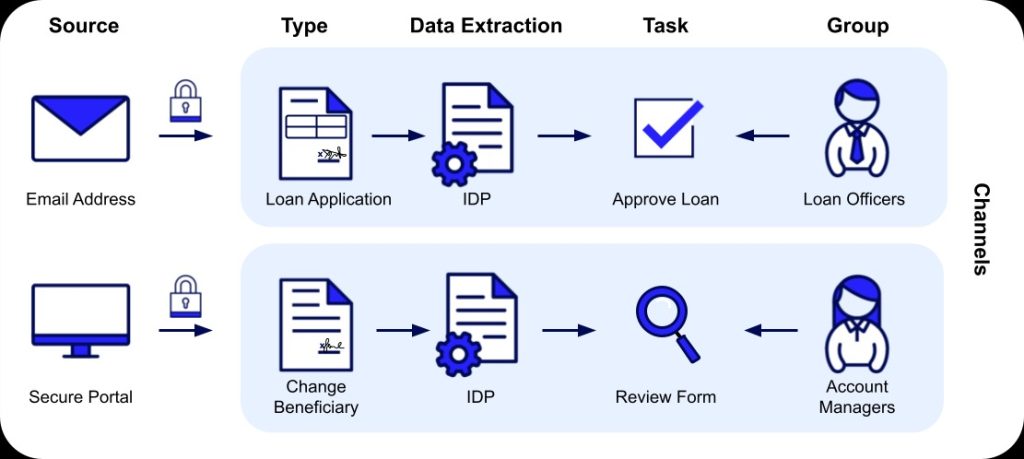
This is the section where the role has changed the most. AI developer tools now span a wide range of functions, and a technical post-sales leader needs at least working fluency across each category:
| Category | What It Does | Why Post-Sales Leaders Should Care |
| AI code assistants | Suggests or generates code inside an IDE | Customers use these during integration work; understand how they affect implementation speed and code quality |
| AI-powered documentation search | Answers developer questions from docs using natural language | Directly affects self-serve support volume and deflection rates |
| AI ticket triage and routing | Classifies and routes support tickets automatically | Changes how technical account managers prioritize their queue |
| AI-assisted debugging | Surfaces likely root causes from logs and error patterns | Speeds up incident resolution during and after implementation |
| AI workflow automation | Chains actions across tools based on triggers or natural language instructions | Often the actual feature customers are buying , not just a support add-on |
Warning: Don’t assume every customer wants AI automation turned on by default, especially in regulated industries. Some enterprise buyers explicitly restrict AI-assisted code generation or AI-powered data processing for compliance reasons. A technical post-sales leader who pushes AI-first workflows without checking a customer’s governance posture risks a stalled or rejected deployment.
Anthropic’s Claude, OpenAI’s models, and the major cloud providers’ AI services are the infrastructure most of this tooling is built on, and technical post-sales leaders don’t need to become machine learning researchers to be effective here. What they do need is enough conceptual grounding to explain, in plain language, what a model can reliably do, where it’s prone to error, and why a human-in-the-loop step still matters for high-stakes actions. [Internal Link: AI Automation Guide]
AI-Powered Developer Workflows in Practice
The practical shift for post-sales teams is that implementation playbooks increasingly include an AI configuration step , deciding which AI features to enable, how to handle data used for AI features, and how to set expectations about accuracy. That’s a new checklist item that didn’t exist in most onboarding runbooks five years ago, and leaders who haven’t updated their playbooks are leaving a gap their competitors are already closing.
Enterprise Software Implementation and API Integration Skills
None of the AI-specific competencies matter if the fundamentals of enterprise implementation are shaky. Technical post-sales leaders still need teams that can:
- Scope realistic implementation timelines based on a customer’s existing architecture
- Design clean API integrations that don’t create brittle dependencies
- Handle authentication, rate limiting, and data mapping issues without escalating every problem to engineering
- Document integration decisions clearly enough that a customer’s team can maintain them independently
API integration work benefits from AI tooling too , AI-assisted code generation can speed up boilerplate integration work considerably. But the judgment calls around API design, error handling, and long-term maintainability still require human expertise. Leaders should position AI tools as accelerants for their teams’ integration work, not replacements for the architectural thinking behind it.
Reference documentation from vendors like GitHub, Microsoft, AWS, and Google Cloud remains foundational here, and strong technical post-sales teams treat fluency in those platforms’ documentation as a baseline skill, not a specialty.
Automation Strategy and Developer Productivity
Automation strategy has become a core competency area because customers increasingly ask post-sales teams to help them automate parts of their own workflow using the vendor’s product , not just consume the product as-is.
This requires technical post-sales leaders to think like process designers, not just integrators. A useful framework for teams to internalize:
- Identify the highest-friction manual task in the customer’s workflow, not the most impressive one to automate
- Map the current process before proposing an automated version
- Pilot automation on a narrow, low-risk workflow rather than the whole pipeline at once
- Instrument the automation so both the vendor and customer can see whether it’s actually saving time
- Expand deliberately, using pilot data to justify scope increases
Developer productivity gains from automation are real, but they’re also easy to overstate. A technical post-sales leader who can show a customer a measured before-and-after , ticket resolution time, deployment frequency, integration setup time , builds far more credibility than one who relies on general claims about efficiency.
[Internal Link: Best AI Developer Tools]
Technical Consulting, Security, and Compliance Awareness
Technical post-sales work increasingly overlaps with technical consulting, especially at the enterprise tier. Customers expect post-sales engineers to advise on architecture decisions, not just implement a predefined integration path.
That advisory role now has to account for AI-specific security and compliance questions that didn’t exist in most implementation conversations a few years ago:
- Where does customer data go when an AI feature processes it, and is it used for model training?
- What audit trail exists for actions an AI workflow takes autonomously?
- How does the product handle role-based access control for AI-assisted features?
- What compliance certifications cover the AI components specifically, versus the platform as a whole?
Best Practice: Build a standing FAQ document, reviewed with legal and security teams, that answers the AI data-handling questions enterprise customers ask most often. Handing a customer’s security team a clear, pre-approved answer is far more effective than improvising an answer live on a call.
Security and compliance competency doesn’t require post-sales leaders to become security engineers, but it does require enough fluency to have a credible conversation with a customer’s security team before that conversation gets escalated past the post-sales function entirely.
Technical Enablement and Cross-Functional Collaboration
Technical post-sales leaders don’t operate in isolation. Their teams sit between product, engineering, sales, and the customer, and the leaders who succeed treat cross-functional collaboration as a competency to be actively managed, not something that happens automatically.
Technical enablement , training the post-sales team on new product capabilities, especially AI features that ship on faster release cycles than traditional software , has become a bigger job than it used to be. AI features often ship with more nuance and more edge cases than a typical feature release, which means enablement content needs to go deeper than a one-page release note.
Practical approaches that work well:
- Pair every AI feature release with a short internal demo showing both the happy path and a known failure mode
- Create a shared, searchable log of AI-related customer questions and how they were answered
- Loop post-sales feedback directly into product teams building AI features, since post-sales engineers often see edge cases before anyone else does
Leadership Skills That Scale Post-Sales Teams
Individual technical competency only goes so far. The leaders who build durable post-sales organizations combine technical credibility with a specific set of management skills:
- Hiring for adaptability over static expertise. The specific tools change too fast for deep tool-specific hiring to make sense long-term. Hire for strong fundamentals and a demonstrated ability to learn new tooling quickly.
- Building psychological safety around AI mistakes. Teams that fear admitting an AI-assisted workflow failed will hide problems instead of surfacing them, which is far more costly than the original mistake.
- Protecting focus time. Post-sales roles are reactive by nature. Leaders who don’t actively protect blocks of uninterrupted time for their teams end up with engineers who never build deep product expertise because they’re always firefighting.
- Translating technical work into business language for leadership. A post-sales leader who can’t articulate the revenue impact of their team’s work in board-level terms will struggle to get headcount and budget, regardless of how technically strong the team is.
Measuring Business Impact
Technical post-sales leaders need a small set of metrics they can defend in any executive conversation. The specific metrics vary by company, but strong post-sales organizations typically track a version of the following:
| Metric | What It Signals |
| Time to first value | How quickly a customer’s team sees the product work as intended |
| Net revenue retention influenced by post-sales | Whether the team’s work correlates with expansion, not just renewal |
| Support ticket deflection rate | Whether documentation, self-serve tools, and AI-assisted support are actually reducing load |
| Escalation rate to engineering | Whether the post-sales team can resolve issues independently |
| Customer-reported technical satisfaction | A qualitative check against the quantitative metrics above |
Key Takeaway: Metrics matter less individually than they do as a set. A team that improves time-to-value but sees escalation rates climb hasn’t actually gotten more efficient , they’ve just moved the cost somewhere else.
Real Enterprise Use Cases
Because specific customer names and figures vary by company and often aren’t publicly disclosed, it’s worth describing the shape of real enterprise use cases rather than inventing specific case studies. Patterns that show up consistently across enterprise SaaS post-sales teams include:
- Phased AI rollout during implementation. Enterprise customers frequently ask to start with AI features disabled during initial rollout, then enable them incrementally once their security review is complete. Technical post-sales teams that build this phasing into their standard implementation plan avoid last-minute scope surprises.
- AI-assisted migration tooling. When customers migrate from a competitor’s product, AI-assisted code translation and data mapping tools can meaningfully cut migration timelines , but only when a human reviews the output before it goes to production.
- Support deflection through AI-powered documentation search. Post-sales teams that invest in AI-searchable documentation consistently report lower ticket volume for routine setup questions, freeing technical account managers to focus on higher-value architecture conversations.
If you’re building a case study library for your own team, anchor it in verified customer outcomes with permission to publish specifics , general patterns like these are useful for training, but they shouldn’t substitute for real, attributed data in customer-facing materials.
Categories of AI Developer Tooling Platforms Worth Knowing
Rather than recommending specific vendors , which change quickly and vary by use case , it’s more durable to understand the categories technical post-sales leaders should track:
- AI coding assistants integrated into IDEs, which affect how quickly customer developers write integration code
- Cloud-provider AI services (from providers like AWS, Microsoft Azure, and Google Cloud) that many enterprise customers already have contractual relationships with, which affects buy-versus-build conversations
- Foundation model providers such as OpenAI and Anthropic, whose documentation and platform capabilities directly shape what’s technically feasible in a customer’s architecture
- Developer platforms with built-in AI documentation and support tooling, which increasingly compete on developer experience as much as core functionality
- Enterprise automation and workflow platforms that let non-engineering teams build AI-assisted processes without heavy custom development
Technical post-sales leaders don’t need to be experts in every platform, but they do need enough familiarity to have an informed conversation when a customer asks how a proposed integration compares to what they could build using tools they already have access to.
Implementation Best Practices
A few practices consistently separate technical post-sales teams that scale well from those that stall as they grow:
- Document decisions, not just steps. A runbook that only lists what to do, without explaining why, becomes useless the moment an edge case appears.
- Build a feedback loop from support tickets back to onboarding content. If the same question keeps appearing after go-live, the onboarding process , not just the documentation , probably needs to change.
- Set explicit expectations about AI feature limitations during implementation, not after a customer discovers them the hard way.
- Review automation pilots on a fixed schedule, not just when something breaks.
- Keep enablement content current with release cycles. Stale internal documentation is one of the most common causes of inconsistent customer answers across a post-sales team.
Common Mistakes Technical Post-Sales Leaders Make
- Treating AI fluency as optional for senior hires. Experience alone no longer guarantees a candidate can speak credibly about AI-assisted developer workflows.
- Letting sales set AI expectations without post-sales input. Deals closed on inflated AI capability claims become post-sales problems almost immediately.
- Underinvesting in documentation because AI search “handles it.” AI-powered search is only as good as the underlying content it’s searching. Weak docs produce weak AI answers.
- Measuring team success purely on ticket volume. Ticket volume alone doesn’t distinguish between a team solving problems efficiently and a team that’s simply not being contacted because customers have given up.
- Failing to loop edge cases back to product teams. Post-sales engineers often spot AI feature failure modes before anyone else in the company. If that feedback doesn’t reach product, the same issues resurface with every new customer.
The Future of AI in Developer Tooling
The trajectory is fairly clear even if the specific tools keep changing: AI is becoming a default layer across the developer tooling stack rather than a standalone feature. That means technical post-sales competency around AI won’t stay a specialization for much longer , it will become as fundamental as API literacy or cloud infrastructure knowledge is today.
What’s likely to matter more over time is not raw familiarity with AI tools, but judgment about when AI-assisted workflows genuinely help a customer and when they introduce unnecessary risk or complexity. Leaders who build that judgment into their team’s culture , through enablement, feedback loops, and honest conversations with customers about limitations , will be better positioned than teams chasing every new AI feature as a talking point.
Frequently Asked Questions
What is the difference between a solutions engineer and a technical post-sales leader? A solutions engineer is typically an individual contributor focused on technical deal support and implementation. A technical post-sales leader manages the broader function , including solutions engineering, customer success engineering, and technical account management , and is accountable for post-sales technical outcomes across the customer base.
Do technical post-sales leaders need to know how to code? Most benefit from a coding background, since it builds credibility with customer engineering teams, but the role is more about technical judgment and leadership than day-to-day coding output.
How important is AI knowledge for this role right now? It’s becoming increasingly important. Customers expect post-sales teams to speak credibly about AI-assisted features, data handling, and limitations, especially in regulated industries where AI governance questions come up early in implementation.
What’s the biggest skill gap in technical post-sales teams today? Many teams have strong integration and troubleshooting skills but lack structured ways to evaluate and explain AI feature limitations, which creates friction when enterprise customers ask detailed governance questions.
How should leaders measure the ROI of investing in AI developer tooling skills? Track metrics like time-to-first-value, escalation rate, and support deflection before and after AI tooling training, rather than relying on general productivity claims.
Expert Verdict
Technical post-sales leadership hasn’t been replaced by AI , it’s been raised to a higher standard by it. The leaders and teams that thrive are the ones who treat developer tooling AI as core infrastructure to understand deeply, not a feature to bolt onto existing playbooks. Fundamentals like communication, implementation rigor, and cross-functional collaboration still decide most outcomes. AI fluency now decides whether a team can compete for the enterprise deals where those fundamentals get tested hardest.
Final Words
The technical post-sales leader competencies that matter most in 2026 are a blend of the durable and the new. Communication, implementation discipline, and people leadership haven’t gone anywhere. What’s changed is the depth of AI fluency required to operate credibly inside modern developer tooling , from AI-assisted coding to automated support workflows to the governance questions enterprise customers now ask as a matter of course.
Building a technical post-sales team that can operate confidently across both dimensions isn’t a one-time hiring decision. It’s an ongoing investment in enablement, feedback loops, and honest conversations about what AI tooling can and can’t do. Teams that make that investment consistently will be the ones setting the pace for the rest of the industry.
FAQs
-
What are the most important technical post-sales leader competencies?
Key competencies include solutions engineering, API integration, customer success engineering, AI workflow knowledge, technical consulting, communication, leadership, and cross-functional collaboration.
-
Why are technical post-sales leaders important for enterprise SaaS companies?
They improve customer retention, accelerate product adoption, reduce implementation risks, and support expansion revenue by ensuring customers successfully deploy and use complex software solutions.
-
How is AI changing technical post-sales leadership?
AI enables faster onboarding, intelligent documentation, automated troubleshooting, AI-assisted coding, and workflow automation, requiring post-sales leaders to understand both AI capabilities and governance.
-
Do technical post-sales leaders need programming skills?
While they don’t code full-time, a strong understanding of programming, APIs, cloud platforms, and software architecture helps them communicate effectively with engineering teams and enterprise customers.
-
What developer tooling should technical post-sales leaders understand?
They should be familiar with AI coding assistants, CI/CD tools, API testing platforms, documentation systems, workflow automation tools, monitoring solutions, and cloud development platforms.
-
How does AI improve developer productivity in post-sales teams?
AI speeds up code generation, automates documentation, assists with debugging, improves support ticket routing, and reduces repetitive implementation tasks, allowing engineers to focus on higher-value work.
-
What role does API integration play in post-sales success?
API integration is critical because it connects enterprise software with existing systems, ensuring reliable data flow, automation, scalability, and long-term customer success.
-
What security considerations should technical post-sales leaders understand?
They should understand AI data privacy, role-based access control, compliance requirements, audit logging, secure API authentication, and enterprise governance policies.
-
How can technical post-sales teams measure business impact?
Success can be measured through time-to-first-value, customer adoption, renewal rates, expansion revenue, support ticket reduction, implementation speed, and customer satisfaction.
-
What challenges do technical post-sales leaders face with AI adoption?
Common challenges include managing customer expectations, ensuring AI governance, maintaining data privacy, integrating AI into existing workflows, and balancing automation with human expertise.
-
What is the future of technical post-sales leadership?
The future combines deep technical expertise with AI fluency, automation strategy, developer experience optimization, and enterprise consulting skills to deliver greater customer value and long-term business growth.
-
What does a technical post-sales leader do?
A technical post-sales leader oversees customer onboarding, implementation, technical success, and long-term product adoption after a sale. They ensure enterprise customers achieve value through smooth integrations, technical guidance, and ongoing support.